Monday, December 28, 2020

The Criminal Justice Program at Murray State University


A member of the Society of Former Special Agents, James N. Hendricks is a retired law enforcement professional who served 22 years with the FBI and received the FBI Director's Award for Outstanding Counterterrorism Investigation in 2013. Prior to beginning his career, James N. Hendricks earned a bachelor's degree in criminal justice from Murray State University.


The bachelor program in criminal justice at Murray State is the only of its kind offered at a Kentucky academic institution. Students can also choose to pursue criminal justice as a minor. This complements those pursuing a bachelor's degree in chemistry under the forensics track. The school also offers a juvenile justice minor option for students in other departments who aspire to work with children in the juvenile justice system.

Because of the program's relatively small size (it has only four professors), students receive dedicated support throughout their enrollment. Courses emphasize topics such as organized crime, violent crime, juvenile delinquency, and constitutional law. Through these and other courses, students are expected to boost their oral, written, research, and problem-solving skills.

In addition to classroom learning, criminal justice students at Murray State have access to the school's Criminal Justice Society and can participate in internships with local and state agencies, including local police agencies and the Office of the Commonwealth Attorney.

Friday, December 18, 2020

Qualifications and Responsibilities of an FBI Special Agent


Sunday, November 29, 2020

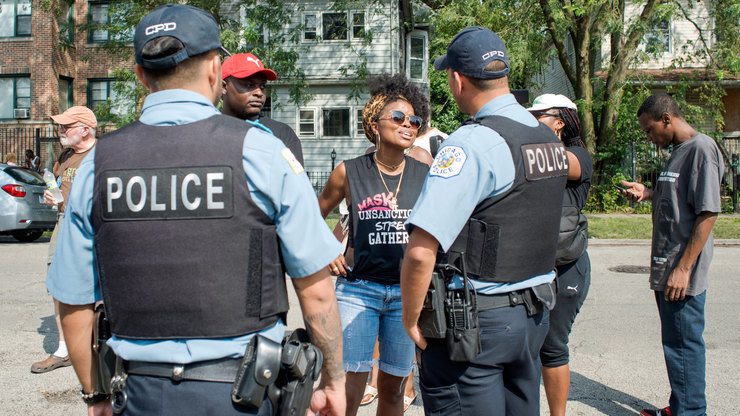
Building Partnerships in the Community

 Police-Community Relations | The Marshall Project

James N. Hendricks is a retired police officer and special agent tasked with investigating federal criminal law violations. Throughout his 28 years of service, he received several awards and honors, including the FBI Directors’ Award in counter-terrorism investigations in 2013. James N. Hendricks took part in the Albany Law Enforcement Resolution Team (ALERT) community forum to foster and improve the relationship between the community and law enforcement agents.

A strained relationship often exists between the police and the community they patrol. The first strategy is for law enforcement officers to live where they work to get to know the residents better. Moreover, it enables the residents to interact with the officer outside of their law enforcement capacity.

Another technique is to encourage officers’ involvement in volunteer programs in the community. It shows active participation and keeps the individual connected to the neighborhood they police. Officers can also switch to community policing to ensure direct officer involvement with residents to uncover and address neighborhood infractions’ root causes.

Wednesday, November 4, 2020

Understanding Police Stress

Image for post

James N. Hendricks is a retired police officer and FBI special agent with 28 years of service. He was active in building trusting relationships between law enforcement and the communities he served and continues to be a strong proponent of law enforcement stress management.

Police Officers face dangerous situations daily, and the danger lurks not on the streets alone. The pressures of law enforcement put officers at risk for high blood pressure, insomnia, increased levels of destructive stress hormones, heart problems, post-traumatic stress disorder and suicide, researchers have found through a decade of studies of police officers.

A number of factors lead to increased stress for the law enforcement professions: poor management, excessive overtime, frequent rotating shifts, and regular changes in duties. These factors can all lead to strained relationships at home, financial difficulties, health concerns, and depression.

Stress management professionals recommend planning meals with healthy options instead of high calorie fast food, scheduling vacations and downtime to rest and relax, and creating a realistic exercise program. By finding a work/life balance, police officers can decrease the impact of stressors faced daily on the job.

The Criminal Justice Program at Murray State University

A member of the Society of Former Special Agents, James N. Hendricks is a retired law enforcement professional who served 22 years with the...